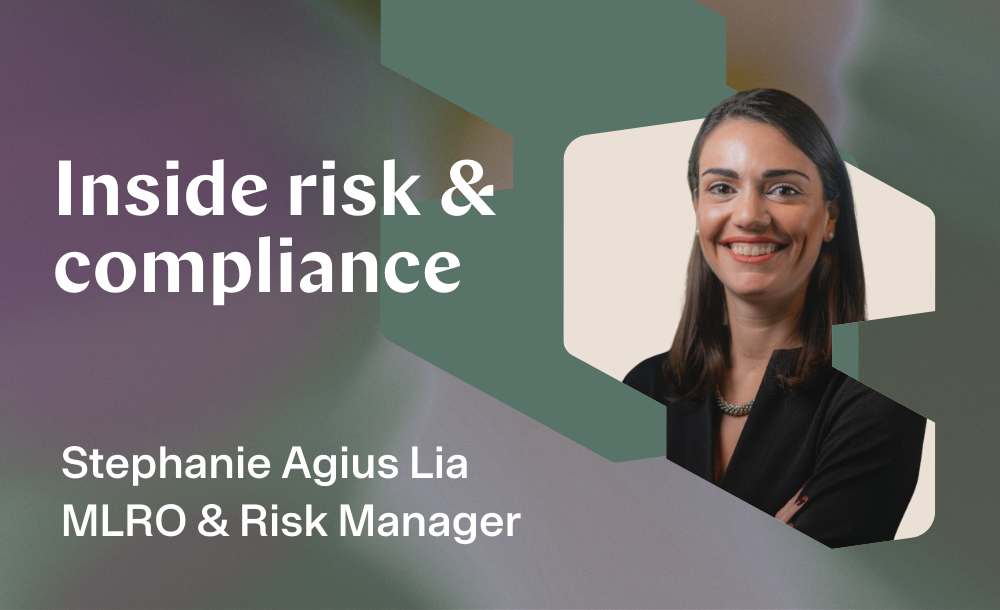
Paytently is entering a new phase. With our Payment Institution licence authorised by the MFSA, we are evolving from a fast growing challenger into a regulated financial institution built for long term scale.
We are continuing the conversation around regulation with Stephanie, our MLRO & Risk Manager, who we sat down with to discuss responsible growth, AML/KYC 2.0, and why compliance is a commercial advantage when done properly.
Joining the mission: Why Paytently?
Q: You’re joining Paytently at a time of rapid growth. What about the role and the company’s trajectory stood out to you?
What stood out immediately was the ambition, but also the intent behind it. Securing the PI licence is a significant milestone. It shows a commitment not just to growth, but to accountability.
From my first conversation with the team, it was clear that compliance is not treated as a box-ticking function. It is embedded into how the business operates. Building a robust governance framework at this stage, and shaping how compliance scales alongside the company, is exactly the kind of challenge I was looking for.
Defining responsible growth
Q: You often talk about responsible growth. What does that mean in practice for a modern fintech business?
In fintech, speed matters. But if growth outpaces controls, risk accumulates quietly in the background.
Responsible growth means scaling in a way that is sustainable and aligned with regulatory expectations from day one. It means designing processes that can withstand volume, complexity and scrutiny. Compliance must evolve with the business, not react to it.
For us, integrity and customer protection are not trade-offs against growth. They are preconditions for it.
The future of KYC and onboarding
Q: You’ll be speaking on AML/KYC 2.0 at the NextGen Payments & RegTech Forum in Malta this February. What is the biggest shift needed in how we handle onboarding today?
Onboarding has become increasingly complex. Robust due diligence is non-negotiable, but the experience should not feel unnecessarily burdensome.
A major opportunity lies in smarter data sharing. Structured reliance frameworks or centralised registries could allow subject persons to securely access already verified customer information. Reducing duplication lowers friction and enables compliance teams to focus on higher value risk assessment rather than repetitive administration.
That is what AML/KYC 2.0 should look like: risk-based, efficient and collaborative.
AI: smarter detection, less noise
Q: How can technology like AI improve detection without overwhelming compliance teams?
The objective is not to collect more data, but to interpret existing data more intelligently.
AI can identify patterns and anomalies that strengthen early detection while reducing false positives. By automating repetitive checks, compliance specialists can focus on judgment-led decisions and complex investigations.
When advanced analytics are combined with strong governance and secure data handling, you achieve a more effective risk-based model without adding operational friction.
Building a culture of compliance
Q: In a fast moving environment, how do you build a compliance culture that people want to be part of?
It starts with clarity of purpose. People engage when they understand why something matters.
That means:
- Clear communication about the reasoning behind decisions
- Equipping teams with the right tools and training
- Leading by example, particularly when commercial pressure is high
At Paytently, compliance is a strategic partner to the business. It supports innovation while ensuring our growth remains resilient and sustainable.

%20(1).jpg)